What growth marketing is and when it makes sense for your company.
Growth marketing is a method for growing with data and experiments, looking at the whole funnel and not just at attracting visitors. This guide shows how it works, how it differs from digital marketing and how to tell whether it is time to apply it in your company.
 Fabrício Martins
Founder of Martin Marketing & Design

In short
- What it is: a growth method based on hypotheses, tests and measurement.
- What it looks at: acquisition, activation, retention, revenue and referral.
- Who it is for: companies that already sell and can measure their own funnel.
- Where to start: map the funnel and choose a North Star metric.
What growth marketing is
Growth marketing is the scientific method applied to a company’s growth. Instead of betting everything on one big campaign, the team raises hypotheses, runs small tests, measures the result and invests more only in what has proven to work.
The term gained traction in 2010, when entrepreneur Sean Ellis used the expression growth hacker to describe the professional whose only compass is growth. Since then, the practice has left startups and reached companies of all sizes, under a more sober name: growth marketing.
The difference from traditional marketing is not in the tools. It is in the question. Traditional marketing asks how do I attract more people? Growth asks at which stage of the journey am I losing the most money?
Growth marketing vs. digital marketing: what is the difference
Both use the same channels. What changes is the starting point and the way of deciding.
| Digital marketing | Growth marketing | |
|---|---|---|
| Focus | Attract and generate demand | Grow at every stage of the funnel |
| Starting point | A campaign or a channel | A hypothesis and a metric |
| How it decides | Experience and references | Controlled tests and data |
| Horizon | Campaigns with a start and an end | Continuous learning cycles |
| How it measures success | Reach, clicks and leads | Revenue, retention and cost per customer |
One does not replace the other. Growth uses the channels of digital marketing, such as SEO, ads and email, but judges each one by what it delivers at the end of the funnel.
How it works in practice: the AARRR funnel
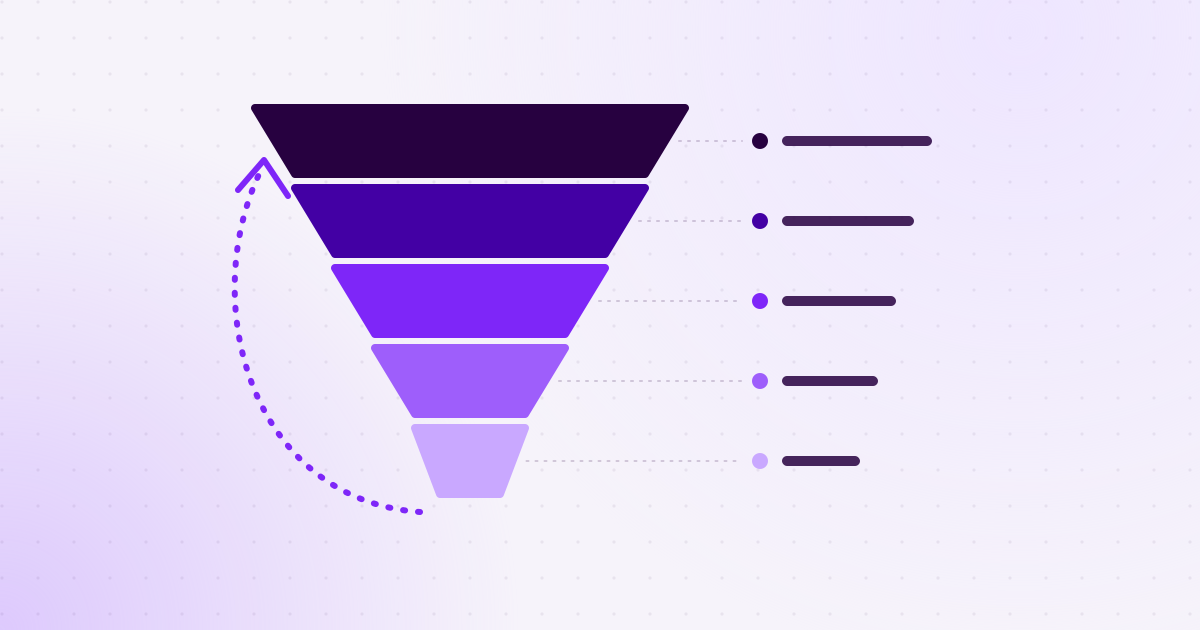
The most widely used model for organizing the work is AARRR, introduced by Dave McClure in 2007. It splits the customer journey into five stages, each with a key question.
- Acquisition
- Activation
- Retention
- Revenue
- Referral
- Acquisition: how do people reach you?
- Activation: do they have a good first experience, such as requesting a quote or booking a call?
- Retention: do they come back?
- Revenue: how much does each customer generate?
- Referral: do they recommend you?
The value of the model is in showing where the bottleneck is. A company with a lot of traffic and little conversion does not need more ads. It needs to fix activation.
Gains multiply. Improving 10% at four stages does not add up to 40%: it multiplies to 46%. You can test this math in the simulator on the growth marketing page.
A simple example
Imagine a clinic that gets 2,000 website visits a month and 40 booking requests. The conversion rate is 2%. The most common reaction would be to raise the ad budget to bring in more visits.
The growth view asks a different question: why do 98% leave without booking? The hypothesis is that the form, with nine fields, scares off people on their phones. The test is simple: a version with three fields, shown to half the visitors for four weeks.
If the new version’s conversion goes to 3%, the clinic goes from 40 to 60 requests a month with the same traffic and the same budget. This is a hypothetical example, but the logic is the one that repeats in every project: find the bottleneck, test small and only then scale.
The metrics that matter: CAC, LTV and payback
Growth swaps vanity metrics for three numbers that show whether growth is healthy.
- CAC, customer acquisition cost: everything you spend on marketing and sales divided by the number of new customers in the period.
- LTV, lifetime value: how much revenue a customer generates while they keep buying from you.
- Payback: how long it takes the customer to pay back what it cost to win them.
What matters is reading them together. A low CAC with customers who never return can be worse than a high CAC with loyal customers. A common market benchmark is to aim for an LTV at least three times the CAC. Below that, growth costs more than it brings in.
These three numbers also help decide where to test first. If CAC is high, the bottleneck is usually in acquisition or activation. If LTV is low, the problem is retention or order value.
How to choose the North Star metric
The North Star metric is the number that best sums up the value the company delivers to the customer. When it goes up, revenue tends to go up with it. It organizes the priorities: a test only enters the queue if it has a chance of moving it.
Some examples, by type of business:
- Clinic: appointments attended per month, not bookings, because a patient who does not show up creates value for nobody.
- Online store: orders from customers who have bought before.
- Subscription software: accounts that use the product every week.
- B2B service: proposals accepted per month.
To know whether the choice is good, ask three questions. Does it reflect value the customer received, and not just marketing effort? Does it anticipate revenue? Can the team influence it with its own work? If any answer is no, keep looking.
The most common mistake is choosing revenue. It is the final result, it arrives late and it depends on too many factors. The North Star metric sits one step earlier: it is the customer behavior that generates revenue.
When growth marketing makes sense for your company
It makes sense when
- You already sell and have reasonably predictable demand.
- You can measure visits, leads and sales.
- You have volume to test: a few hundred visits a month already help.
- You are willing to change your mind when the data contradicts the opinion.
It is not time yet when
- The product or the offer has not been validated.
- There is no measurement in place at all.
- The operation cannot handle more customers.
If you saw yourself in the second list, the first step is not growth. It is fixing the foundation: offer, website and measurement.
How to start in four steps
- Map the funnel. Gather the numbers for each stage, even if in a spreadsheet.
- Choose a North Star metric. The number that represents value for the customer and revenue for you.
- List hypotheses and prioritize. For each bottleneck, one test idea. Rank by impact, confidence and ease.
- Run one test at a time. With a start, an end and a success criterion defined before you begin.
After each cycle, record what you learned. The test history is the most valuable asset of a growth team, because it avoids repeating mistakes and speeds up the next win.
How to prioritize tests: the ICE score
Once the funnel is mapped, ideas pour in. The problem becomes the order. A simple way to decide is the ICE score, popularized by Sean Ellis. Each idea gets three scores from 1 to 10:
- Impact: if it works, how much does the North Star metric move?
- Confidence: what evidence do you have that it will work?
- Ease: how much time and money does it cost to test?
| Idea | Impact | Confidence | Ease | Average |
|---|---|---|---|---|
| Cut the form from nine fields to three | 7 | 8 | 9 | 8.0 |
| Rebuild the entire home page | 8 | 5 | 2 | 5.0 |
| Advertise on a new channel | 6 | 4 | 5 | 5.0 |
The average is not a mathematical truth. It is a way to take the decision out of the realm of opinion and to keep the team from always starting with the loudest idea, or with the boss’s favorite. In the example, the form goes first: good impact, strong evidence and almost zero cost.
The experiment sheet
A test with no record becomes an opinion in two weeks. Before you start, write a short sheet with six fields:
- Hypothesis. In the format: if we make this change, this number will go up, for this reason.
- Metric. A single number, the one that decides whether the test worked.
- Audience. Who will see the change and who keeps seeing the current version.
- Duration. Start and end dates, set beforehand.
- Success criterion. The minimum result for adopting the change.
- Learning. Filled in at the end, whether it worked or not.
The hypothesis from the clinic example would read: if the form has three fields instead of nine, mobile conversion will go up, because today most drop-offs happen halfway through filling it in.
The most valuable field is the last one. A test that did not confirm the hypothesis still teaches something about the customer, as long as someone writes down what.
Test ideas for each stage of the funnel
- Acquisition. A new channel with a small budget, a more specific keyword group, a partnership with a business that serves the same audience.
- Activation. A shorter form, a testimonial next to the button, a clearer line about what happens after the contact.
- Retention. A follow-up message after the purchase, a reminder to come back, content that teaches how to get more out of what was bought.
- Revenue. Bundles, a complementary offer at the moment of purchase, an annual plan on better terms.
- Referral. Asking for a referral right after a delivery that was praised, with a benefit for whoever refers and for whoever arrives.
The point is not to test everything. The list helps when the team can only think of ideas for the top of the funnel, which is the most common habit.
The weekly growth routine
Growth does not work as a one-off push. It works as a habit. One short meeting a week, with a fixed agenda, is enough to keep the cycle turning:
- Numbers. How the North Star metric and each funnel stage compare with the previous week.
- Tests completed. What ended, what the result was and what was learned.
- Tests in progress. Any measurement or execution problem?
- Next test. The first in the queue, with its sheet filled in and an owner defined.
In small companies, this meeting can have two people and last half an hour. The format matters less than the regularity. One well-run test a month, for a year, teaches more about the customer than one big annual campaign.
Common mistakes when starting out
- Testing everything at once. You never find out what caused the change.
- Measuring vanity. Likes and reach do not pay the bills.
- Looking only at the top. More traffic into a leaky funnel only increases the waste.
- Giving up early. A test without enough of a sample proves nothing, one way or the other.
Frequently asked questions
In origin, yes. Growth hacking is the original term, closely tied to startups and creative shortcuts. Growth marketing is the evolution: the same method, focused on sustainable growth and on every stage of the funnel.
No. One person with access to the data and the autonomy to test can already run simple cycles. What matters is the discipline: hypothesis, test, measurement and record.
An analytics tool such as GA4, a spreadsheet for the funnel and the test list and, if there are ads, the media platforms themselves. An expensive tool does not replace method.
It does. The funnel exists in any business: someone discovers the company, requests a quote, closes, comes back and refers. In services, the tests usually focus on the contact page, the first response and the sales proposal, which is where most sales are lost.
The first learnings appear in the first test cycle, within a few weeks. Consistent results in revenue usually come after several cycles, when the gains at each stage start to multiply. Anyone promising guaranteed growth in a short time is not talking about growth.
Conclusion
Growth marketing is neither a trick nor a fad. It is an organized way to find out what makes your company grow and to invest in it with confidence. If you already sell and can measure, you can start this week, with the funnel map.
And if you would rather do this with someone who runs this process every month, get to know Martin’s growth marketing consulting.